Feature walls · Full rooms · Murals · Removal
Wallpaper installation in Ottawa, seams that disappear.
Good wallpaper is unforgiving. It shows every bump in the wall behind it and every slip in the pattern. A professional wallpaper installer prepares the wall properly and plans the layout before cutting a single strip. We hang each strip so the joins disappear.
12 years of experience. Free estimate on every job. One crew for the repairs and the paint.
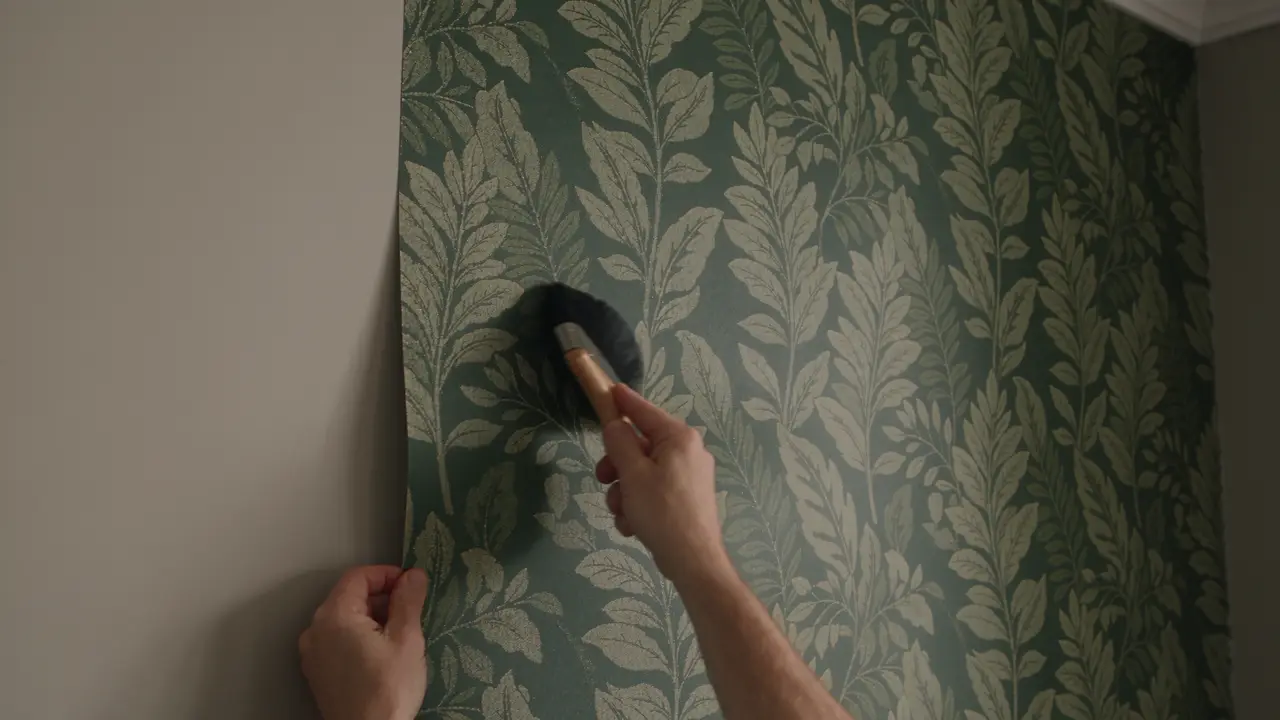
- What we hang
- Non-woven, vinyl, traditional, grasscloth, murals
- Also
- Old wallpaper stripped and walls repaired
- Before paper
- Walls filled, sanded and primed
- Next step
- Send the wall size and the paper you like
The wall decides how the paper looks
People choose wallpaper by its pattern. A wallpaper installer judges a job by the surface underneath.
Paper hides nothing
Wallpaper is a thin skin stretched over the wall. A ridge of old filler, a nail pop or a patch that was never sanded reads straight through it. Metallic and satin papers make flaws more visible, not less. Before we hang any paper, we fill the wall and sand it smooth. Then we check it with a light held flat against it.
Primer is what lets it stick, and come off again
Bare drywall and flat builder's paint soak the water out of wallpaper paste before it can grip, which leads to lifting seams. They also bond so tightly to the paper that removing it years later tears the face off the wall. A wallpaper primer solves both: it seals the surface, gives the paste something to hold, and lets the paper be stripped cleanly one day.
Colour behind the seams
Dark papers on a white wall can show hairlines of white at the joins as the paper dries and tightens. We tint the primer toward the colour of the paper, or run a band of matching colour behind each seam. Either step makes any gap invisible.
Where the wall needs more
Walls that are badly dented, textured or damaged by earlier wallpaper removal need more than filler. Skim coating gives them a smooth, even face first. That is the same work described on our page for drywall repair in Ottawa.
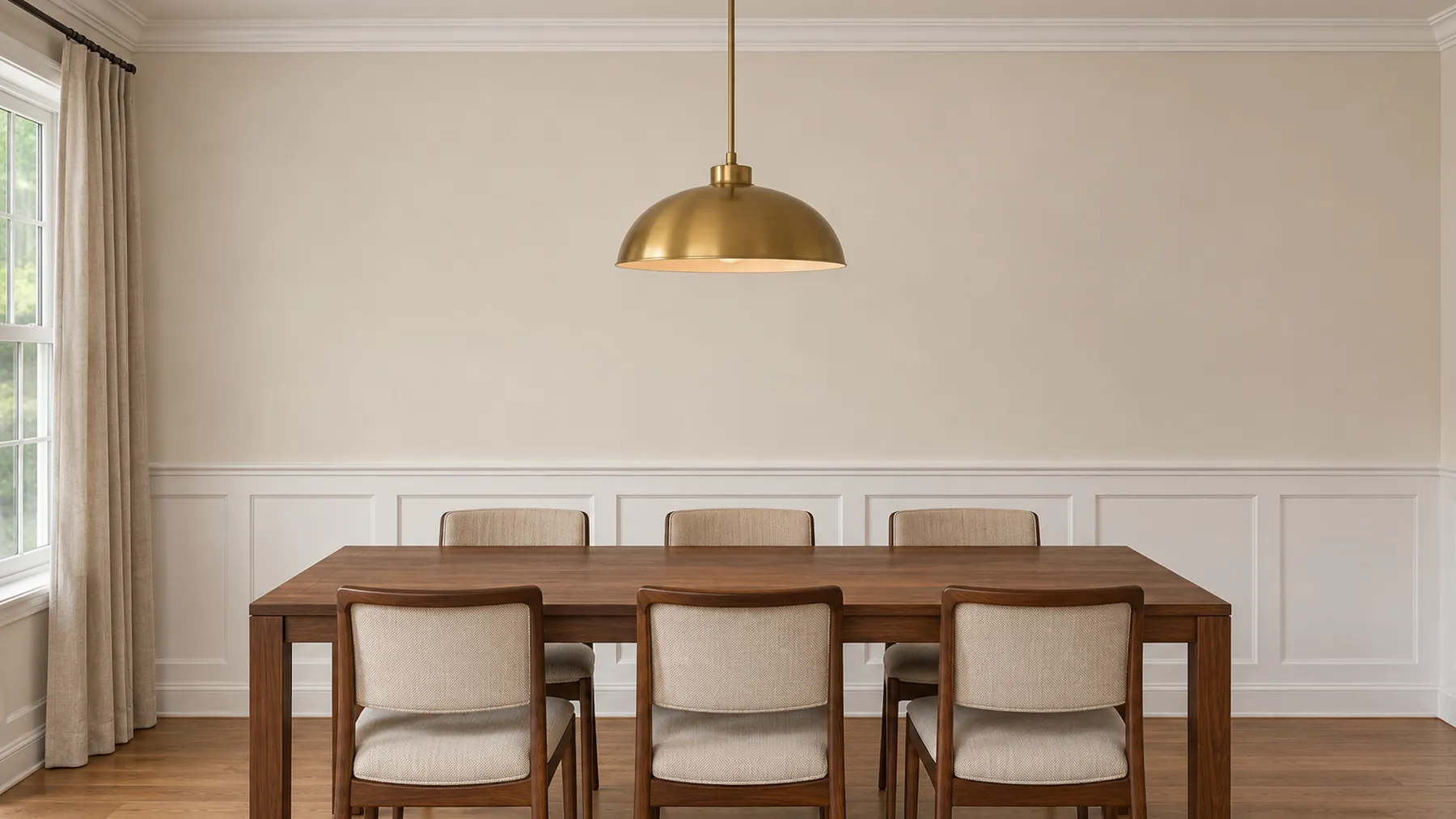
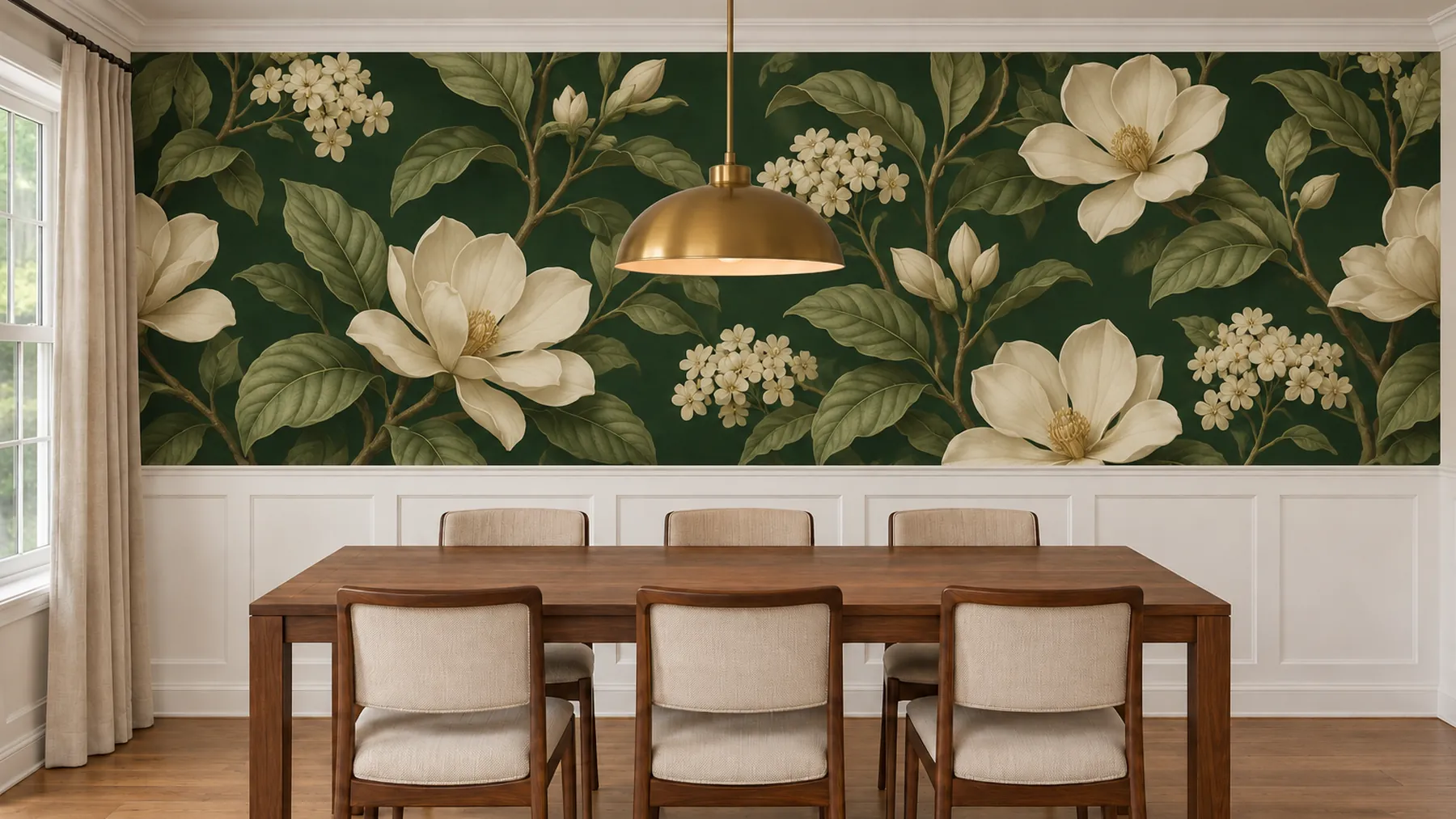
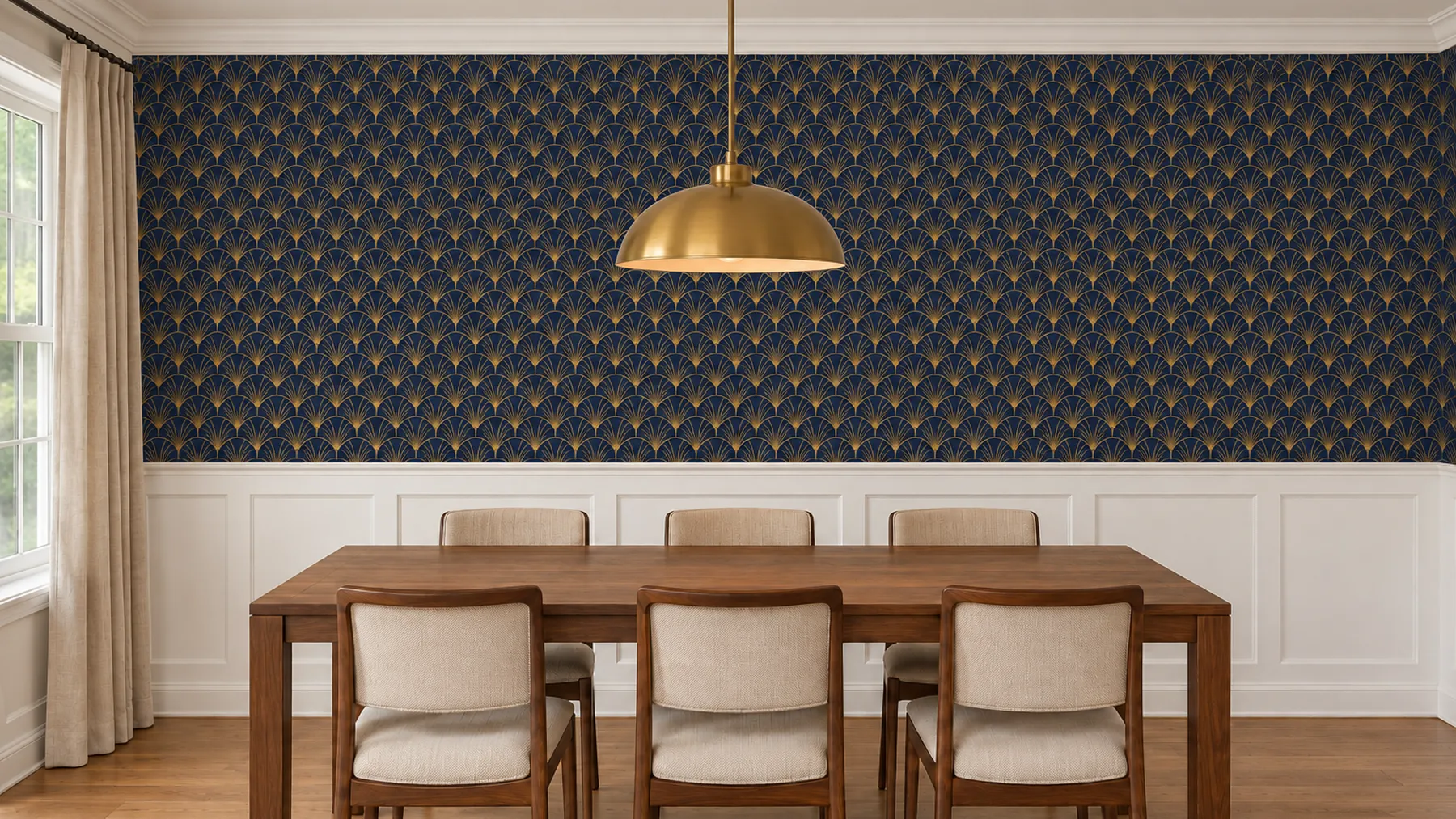
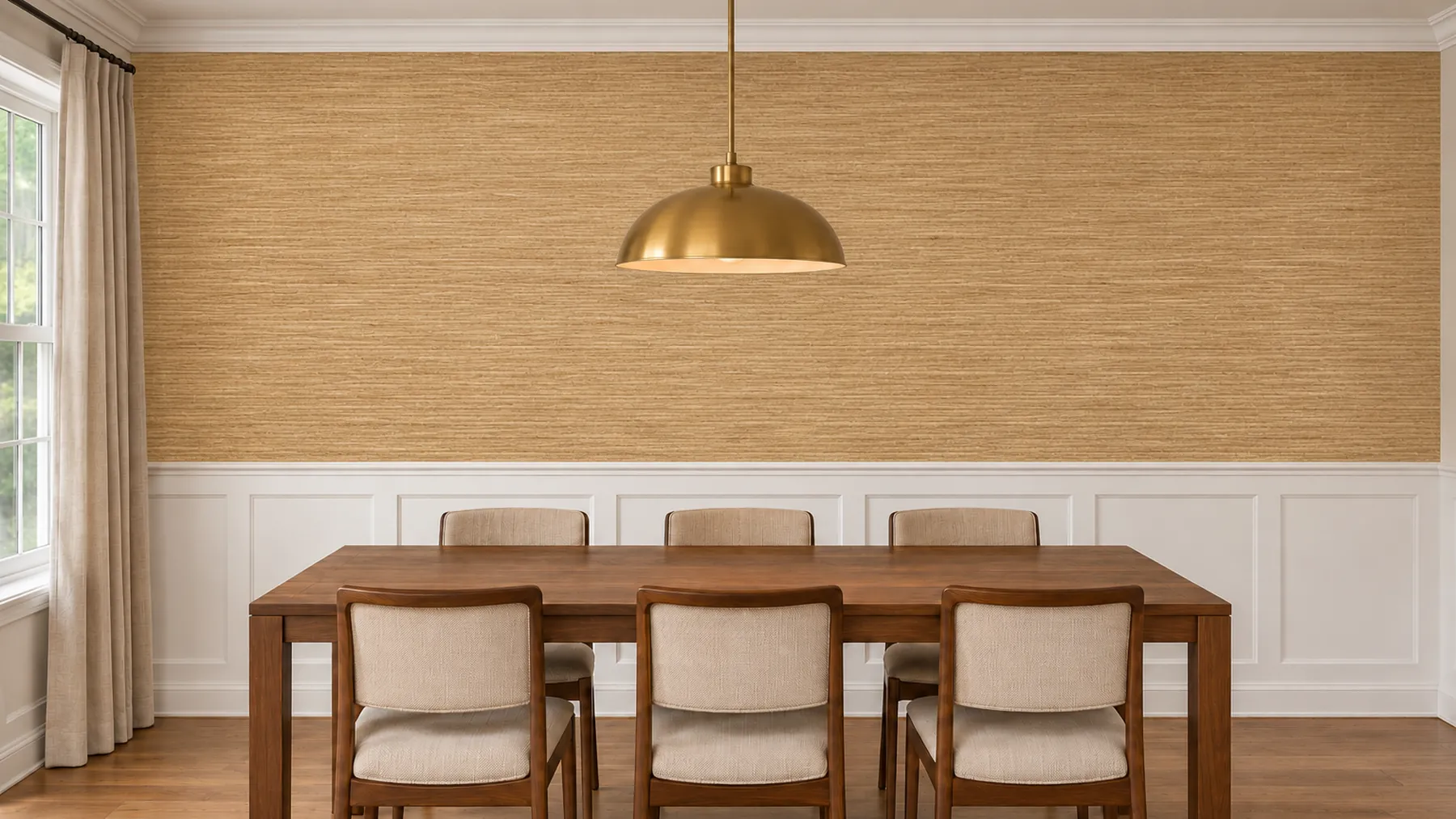
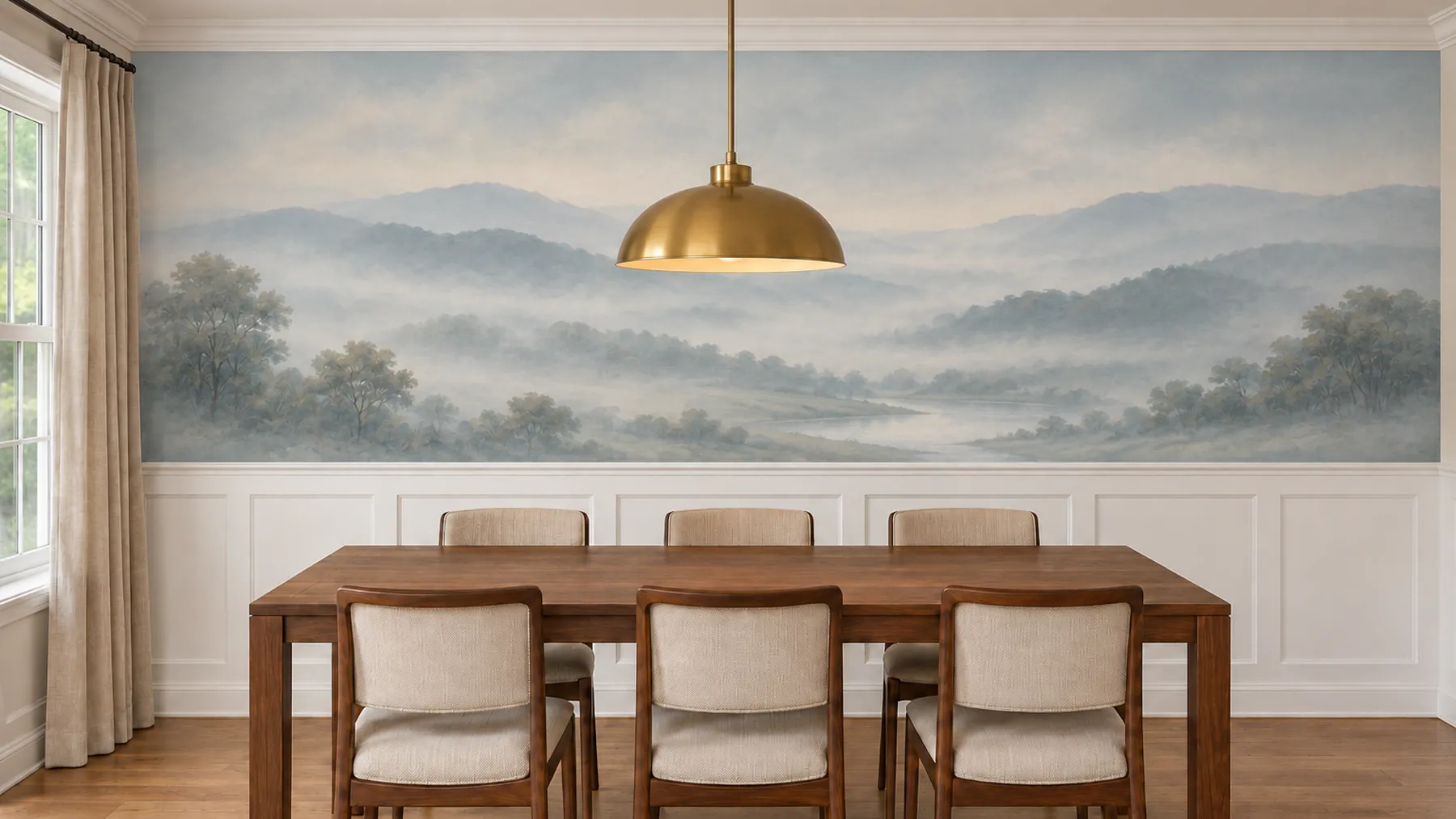
Same wall · four papers
Pick your paper.
Wall 01 of 05
A painted wall
Where most feature walls start. Paper needs a smoother, better-primed wall than paint does, so the prep comes first.
- First job
- Fill, sand and prime with a wallcovering primer
- Worth knowing
- Paper over fresh, unprimed paint can pull it off the wall later
Wall 02 of 05
Large botanical
A big pattern with a long repeat. The first strip sets the whole wall, so it is hung to a plumb line, not to the corner.
- Watch for
- Extra rolls for the pattern repeat
Wall 03 of 05
Small geometric
Crisp and formal. Straight lines show any wall that is out of square, so the layout is planned before the first cut.
- Watch for
- Ceilings and corners that are not square
Wall 04 of 05
Natural grasscloth
Woven texture with visible seams by design. It cannot be scrubbed, and paste on the face stains, so it is hung with clean hands and no rush.
- Watch for
- Seams show; that is the look
Wall 05 of 05
Scenic mural
One picture across numbered panels. It is laid out on the floor first and centred on the wall, because there are no spare panels.
- Watch for
- Exact wall measurements before ordering
One dining room wall, four wallcoverings. Photo-realistic renders for comparison, not finished customer projects. Ratings compare the four with each other.
Which type of wallpaper is it?
Different materials hang, stretch and clean in different ways. Choose the closest.
How a wallpaper job is carried out
Most of the skill is in the planning, before the first strip touches the wall.
Measure and check the order
We measure the walls and allow for the pattern repeat and its waste. Then we tell you how many rolls to buy. All rolls should carry the same batch number, since colour varies between print runs.
Prepare the wall
Switch plates and fixtures come off. We fill, sand and wipe down the wall, then coat it with wallpaper primer and leave it to dry fully.
Plan the layout
We decide where the first strip goes and where to centre the pattern, usually on the focal point of the room. We also decide where the final join will land, ideally in the least visible corner.
Set a true vertical
Walls and corners are rarely plumb. We mark a vertical line with a level or laser and hang the first strip to it. Every strip after follows that one.
Cut, paste and hang
We cut strips with allowance at top and bottom and paste them according to the type of paper. We then position each strip and smooth it from the centre out to remove air.
Match and seam
We slide each new strip into place until the pattern lines up. We then butt it tight to its neighbour and roll it lightly. We wipe paste off the face at once with clean water.
Trim and cut around
We trim top and bottom edges with a sharp blade against a straight edge. We cut in neatly around outlets, windows and door frames, and plates go back on.
Final check
We inspect the wall in daylight and under the room's own lights for bubbles, lifted edges and pattern drift.
Taking old wallpaper off
We remove old wallpaper before new paper or paint. Wallpaper removal has a wide range of outcomes. You rarely know which you will get until we lift the first corner.
When it goes well
Modern non-woven and strippable papers hung over a primed wall peel away dry, in whole sheets. They leave only a film of paste to wash off. We can clear a room in a morning.
When it does not
Some paper fights back: older paper, paper hung over bare drywall, and paper that was painted over. We score it, soak it with a removal solution or steam it, and scrape it off in pieces. Vinyl usually comes away in two stages: the face peels off and the backing is soaked separately. Houses in older parts of the city can have three or four layers, one over another.
The paste is the hidden problem
We wash off every trace of the paste left on the wall. Paint applied over paste residue crackles and peels, sometimes weeks later. After washing, we leave the wall to dry, seal it with a suitable primer, then repair and sand it.
After removal
Once the wall is clean and sound it can be papered again or painted. If painting is the plan, we finish the room as described under interior painting in Ottawa. In a house built before 1990, we have wall material checked before any heavy sanding. Old joint compound can have asbestos in it. That comes from Health Canada.
Pattern, scale and how much to order
Three numbers on the label decide how a paper hangs and how much of it you need.
Pattern repeat
The repeat is the distance down the roll before the design starts again. A small repeat wastes little paper. A large repeat is common on bold florals and murals. It can mean discarding a good length from every strip so the design lines up with its neighbour. That waste is why two papers of the same roll size can need different numbers of rolls for the same wall.
Type of match
A straight match lines up at the same height on every strip. A drop match is offset, so every second strip starts half a repeat lower, which uses more paper and takes more planning. A random or free match, typical of textures and plain weaves, needs no lining up at all and wastes almost nothing.
Scale and the room
Large patterns need distance to be read, so they suit larger walls and rooms you see from across the space. Small, dense patterns blur into a texture from a few steps back, which can be exactly what a hallway or a small bedroom wants. Vertical stripes make a ceiling feel higher. They also expose any wall that is out of plumb, so we set the first strip with particular care.
Ceilings and borders
Papering a ceiling can be stunning in a dining room or a powder room. Ceiling papering is slow, awkward work that needs two people and staging, and we quote it separately from the walls.
Where wallpaper works best
Some rooms flatter wallpaper. Others fight it.
| Room | Why it works, or does not | What we would suggest |
|---|---|---|
| Powder room | Small, no shower steam, and a place where a bold pattern delights instead of overwhelming | Almost anything, including the dramatic paper you would not dare use elsewhere |
| Dining room | Used in the evening under warm light, with little wear on the walls | Rich colours, metallics and murals; above a chair rail or wall to wall |
| Bedroom | A wall behind the bed is a natural feature wall, out of your sightline when you are trying to sleep | One wall in a pattern or texture, the rest painted to match a colour in the paper |
| Entry and stairwell | High impact, but tall walls and constant traffic | A durable, wipeable paper; allow for staging on high stair walls |
| Kitchen | Grease and moisture near the cooking area | Vinyl or vinyl-coated paper, away from the stove and sink |
| Full bathroom | Steam loosens seams and feeds mildew | Only with a good fan and a moisture-rated paper; otherwise paint |
| Office and retail | Branding, texture and acoustics | Commercial-grade vinyl or a printed mural on one key wall |
Wallpaper in Ottawa homes
Our winters are dry indoors. Paper hung in a humid August and paper hung in a heated February behave differently as they dry. Seams can open slightly when the furnace has been running for weeks. Keep the house at a steady, moderate humidity while the paper cures and afterwards. That helps seams stay closed.
Older houses in the Glebe, Sandy Hill and Old Ottawa South often have plaster walls that are hard and sound but far from flat. Layers of earlier papers often sit beneath the paint. Plaster takes wallpaper well once it is repaired and primed. Lining paper is a plain paper hung first. We can use it to even out a rough but solid wall before the decorative paper is hung.
New-build homes in Barrhaven, Kanata, Orleans and Stittsville have the opposite issue. Their smooth drywall is finished with a thin flat paint that is too absorbent and too weak to paper over directly. It needs a proper primer first, or the paper will take the paint with it when it is eventually removed.
Whatever the house, order all the paper at once. A strip may get damaged, or a measurement may come up short. A roll from a later print run will not match the colour of the ones already on the wall.
Questions people ask
Good to know first.
Do you supply the wallpaper?
Most clients pick and buy their own paper. We check the quantity before they order. Ask us for help narrowing down a style or a type that suits the room.
How many rolls of wallpaper will my room need?
It depends on the wall area, the width and length of the roll and the pattern repeat. Send us the wall measurements and a link to the paper. We will work out the number, including a spare.
Can you wallpaper over existing wallpaper?
Papering over old paper is rarely a good idea. Seams and texture show through, and the weight of new paper can pull the old one loose. The reliable method is to remove old wallpaper, then repair and prime the wall.
Does wallpaper hold up in a bathroom with a shower?
Wallpaper works well in a powder room. In a bathroom with a shower, it needs good ventilation and a paper rated for moisture. Otherwise steam will work at the seams.
How long does installation take?
We usually finish a feature wall in a day, including preparation if the wall is in good shape. A full room takes longer, especially with a large pattern repeat or many windows and doors to cut around. A professional installation takes time, since we plan before we paste.
Will removing wallpaper damage my walls?
It depends on how it was hung. Paper over a primed wall usually comes off cleanly. Paper over bare drywall can tear the surface. We then seal the wall and repair it with skim coating and sanding before it is finished.
Do you hang murals and peel-and-stick?
Yes, we hang both. We lay out murals from the centre so the image sits correctly. Peel-and-stick needs a smooth, fully cured painted wall to hold.
Do you paper a single wall or a whole house?
We do both. Our wallpaper installation services cover a single wall, a full room or a whole floor. Powder rooms and feature walls are the most common jobs. Each one gets the same attention to detail at the seams and corners.
Should I paint or wallpaper?
Paint is simpler to change and suits most walls. Wallpaper gives pattern, texture and depth that paint cannot. Many rooms use both: one papered wall, with the others painted in a colour taken from the paper.
More from The Ottawa Painter
See a room get prepped and painted step by step, and try the colour tools, on the main page for painters in Ottawa. Or go straight to another service or area.
Start with a conversation
Tell us about the job
613-851-7831The estimate is free. Call for the quickest answer, or send the form and you will get a call back to talk through the rooms, the surfaces and the timing.