Walls · Ceilings · Trim · Doors
Interior painting in Ottawa, finished like fine furniture.
Rooms covered and protected, every dent and crack dealt with, edges cut by hand and two full coats rolled on. The colour is yours. The crisp lines and the smooth walls are our job.
12 years of experience. Free estimate on every job. One crew for the repairs and the paint.
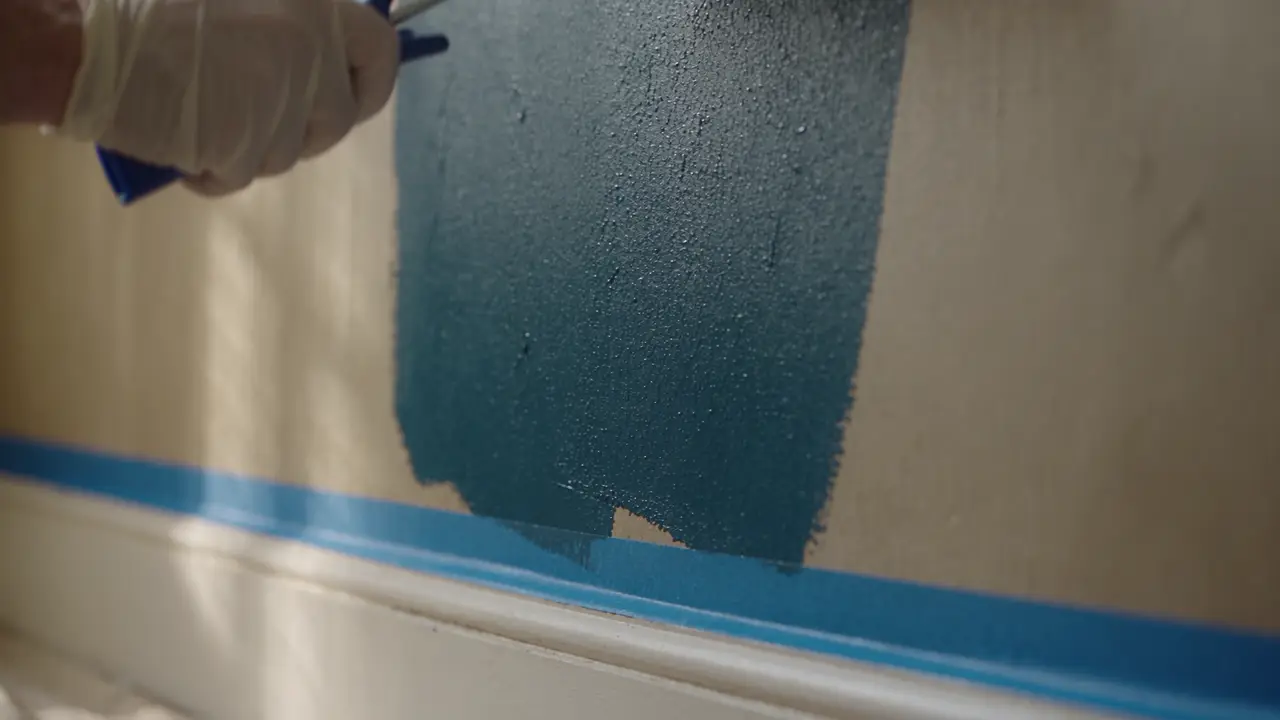
- What we paint
- Walls, ceilings, trim, doors, closets, stairwells
- Standard finish
- Two coats over repaired, primed surfaces
- Good time of year
- Any. Winter suits indoor work well
- Next step
- A walk-through and a written scope
What a careful interior repaint includes
People judge an interior paint job in two places. The first is the edges, where one colour meets another. The second is the wall itself, where light rakes over the surface and shows everything underneath. Here is how our interior painters in Ottawa plan, prep and finish a painting project.
It starts with the walls, not the paint
Paint is a thin film. It follows whatever sits under it, so a dent stays a dent, only now in a new colour. A ridge of old filler stays a ridge too. That is why most of the labour in good house painting happens before we open a can. We fill nail holes and dings. We widen cracks, fill them and tape the ones likely to return. We reset popped drywall screws and cover them. We scrape or sand flat the old drips, roller hairs and lumps left by earlier paint jobs.
Then we sand the patches flush and spot-prime them. Skipping the primer is the most common shortcut in interior painting, and it shows. Bare filler soaks up paint differently from the wall around it. Each patch then appears as a dull spot in the finished sheen. Painters call it flashing. Primer over every repair prevents it.
Edges cut by hand
A painter with a steady hand cuts in the line where the wall meets the ceiling, the trim and the window casings. The work is done freehand, with a brush. Tape has its place on floors, hardware and tricky transitions, but it cannot replace a steady hand. Paint creeps under tape on textured surfaces. A taped line can also look ragged once the tape comes off.
Where walls meet a textured ceiling, a clean line is harder to get. A small scored groove or a careful bead of paintable caulk gives the brush a track to follow. The result is a straight edge instead of a wobbly one.
Two coats, properly timed
The first coat of paint covers. The second coat evens out the colour and the sheen and gives the film its full thickness. That thickness makes the wall washable and durable. Each coat needs the drying time printed on the label before the next coat. Rushing a second coat over paint that is dry to the touch but not ready can leave drag marks and a patchy finish.
A one-coat refresh can work when the colour and sheen stay the same and the walls are in good shape. A strong colour change, a fresh skim coat or stained walls call for primer and two finish coats. So does a move from dark to light. Deep reds, bright yellows and some saturated blues have weak hiding power by nature and may need a tinted primer or a third coat. Your written scope says which applies to each room.
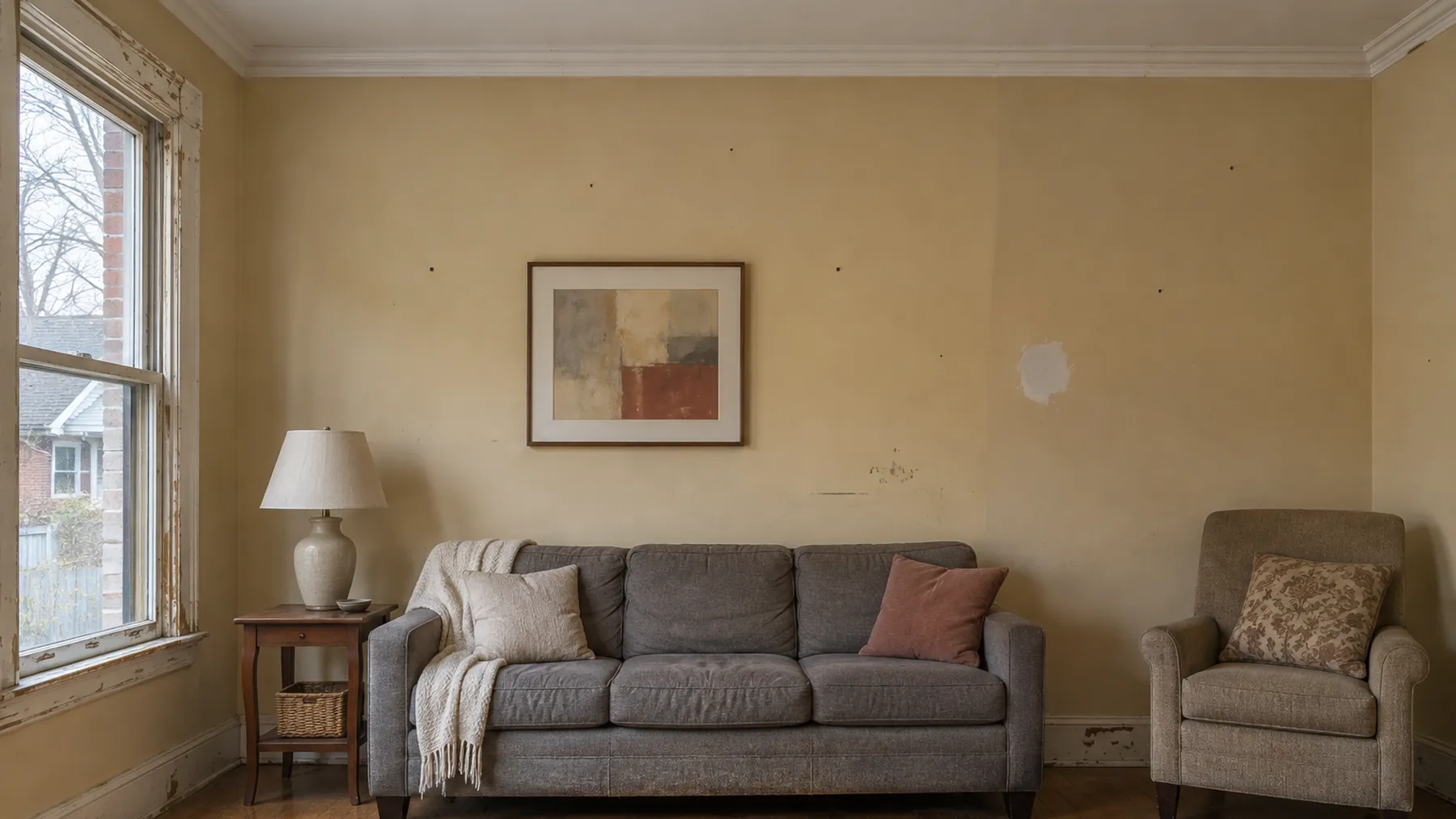
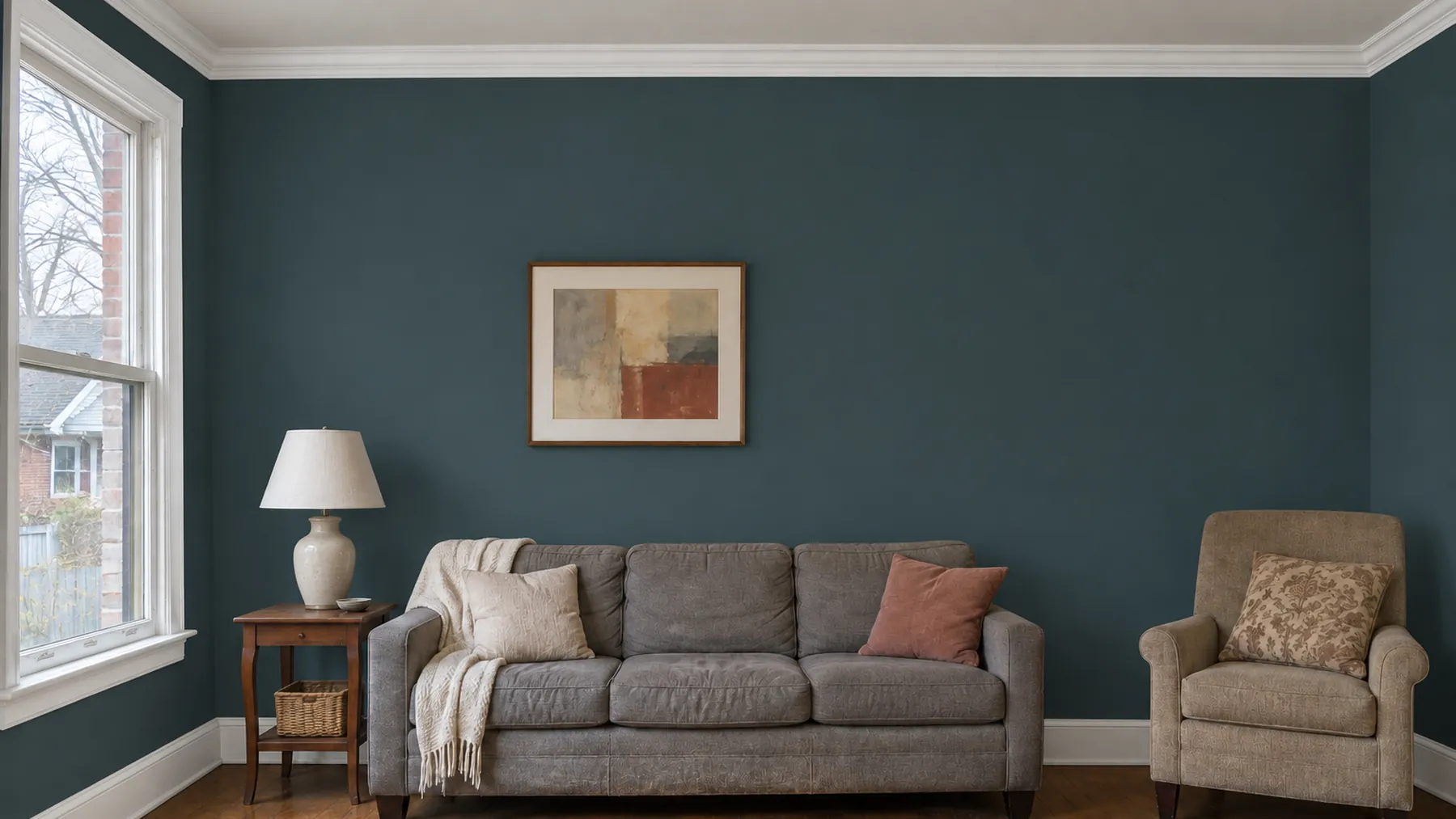
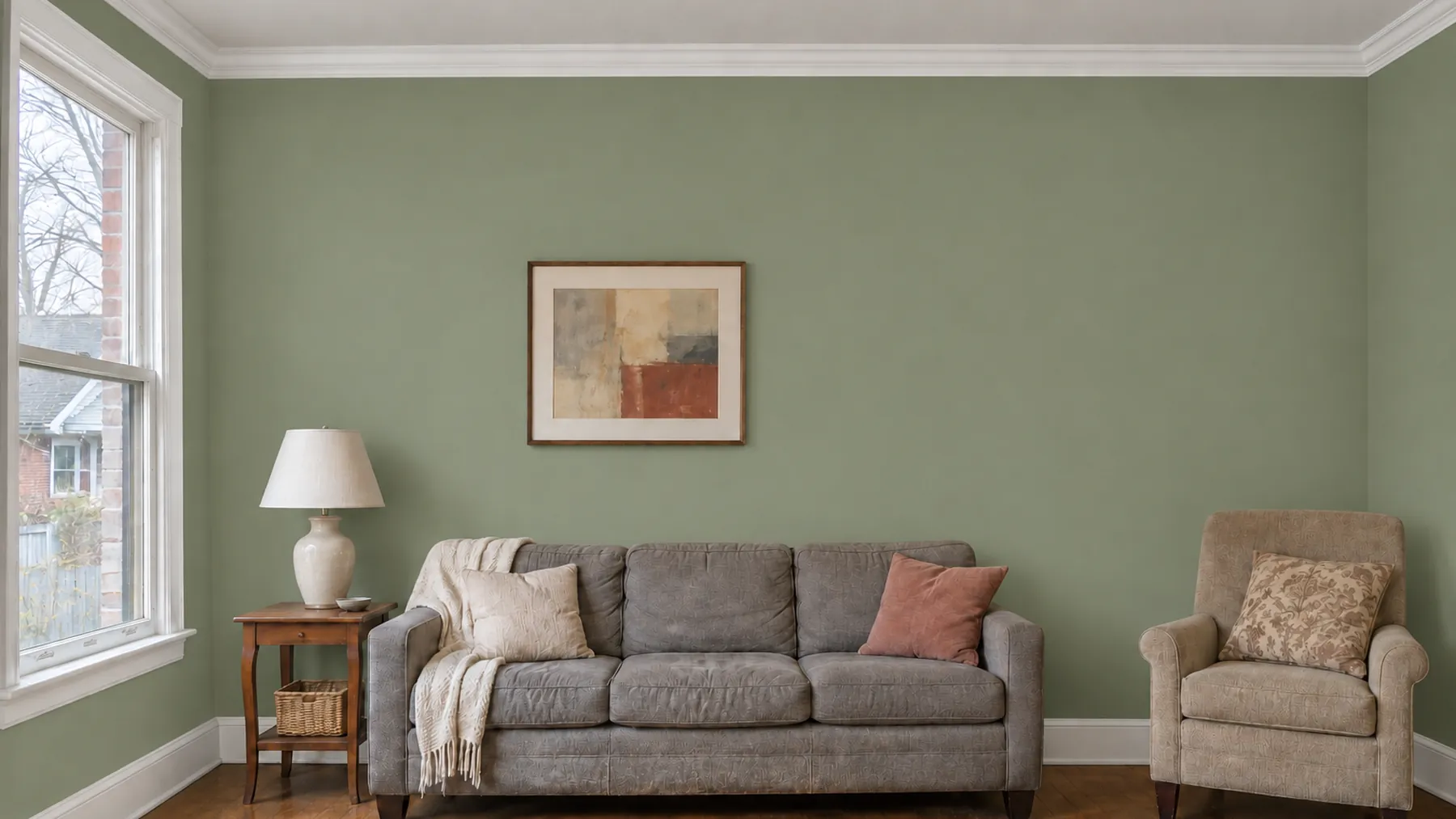
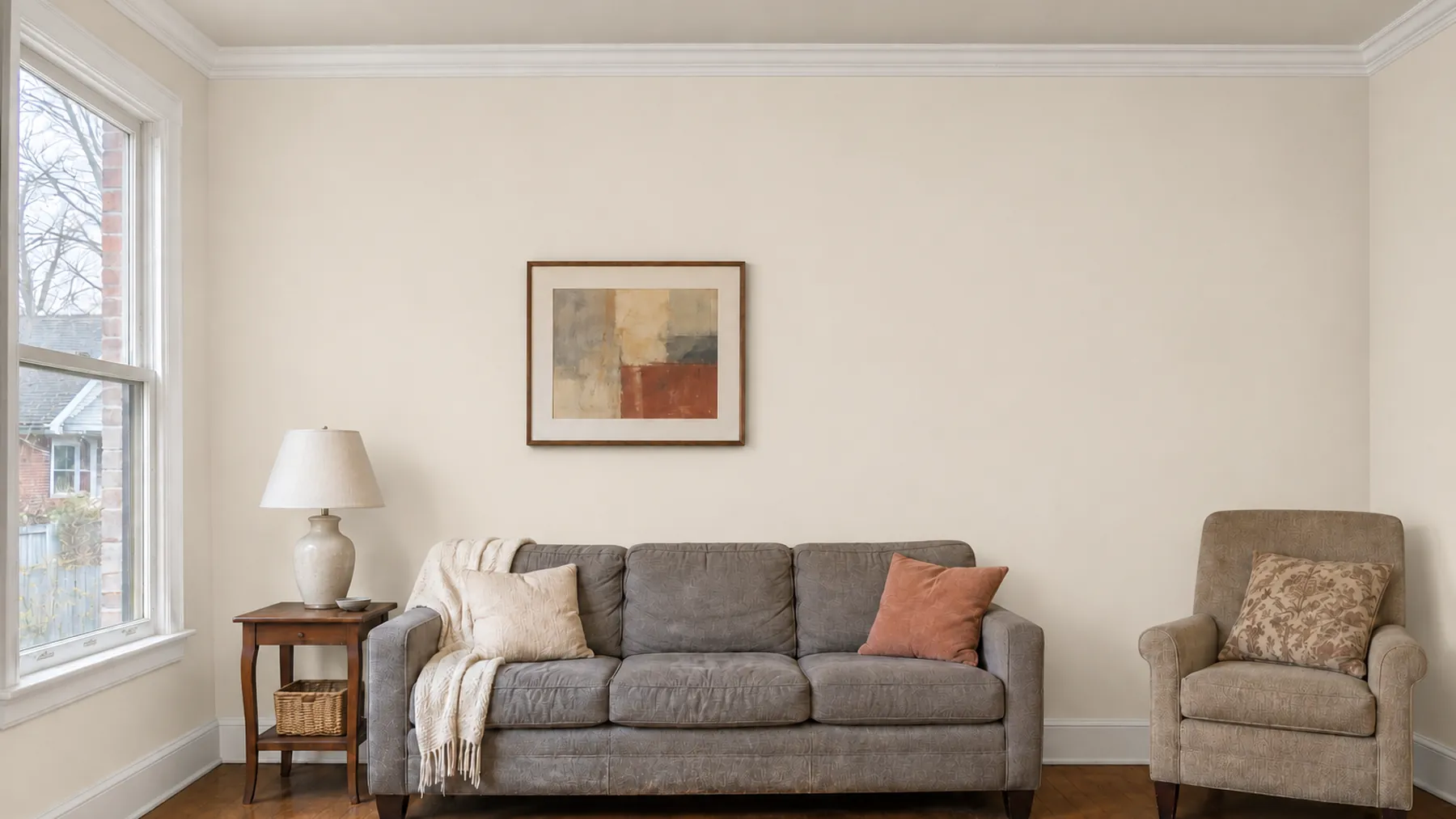
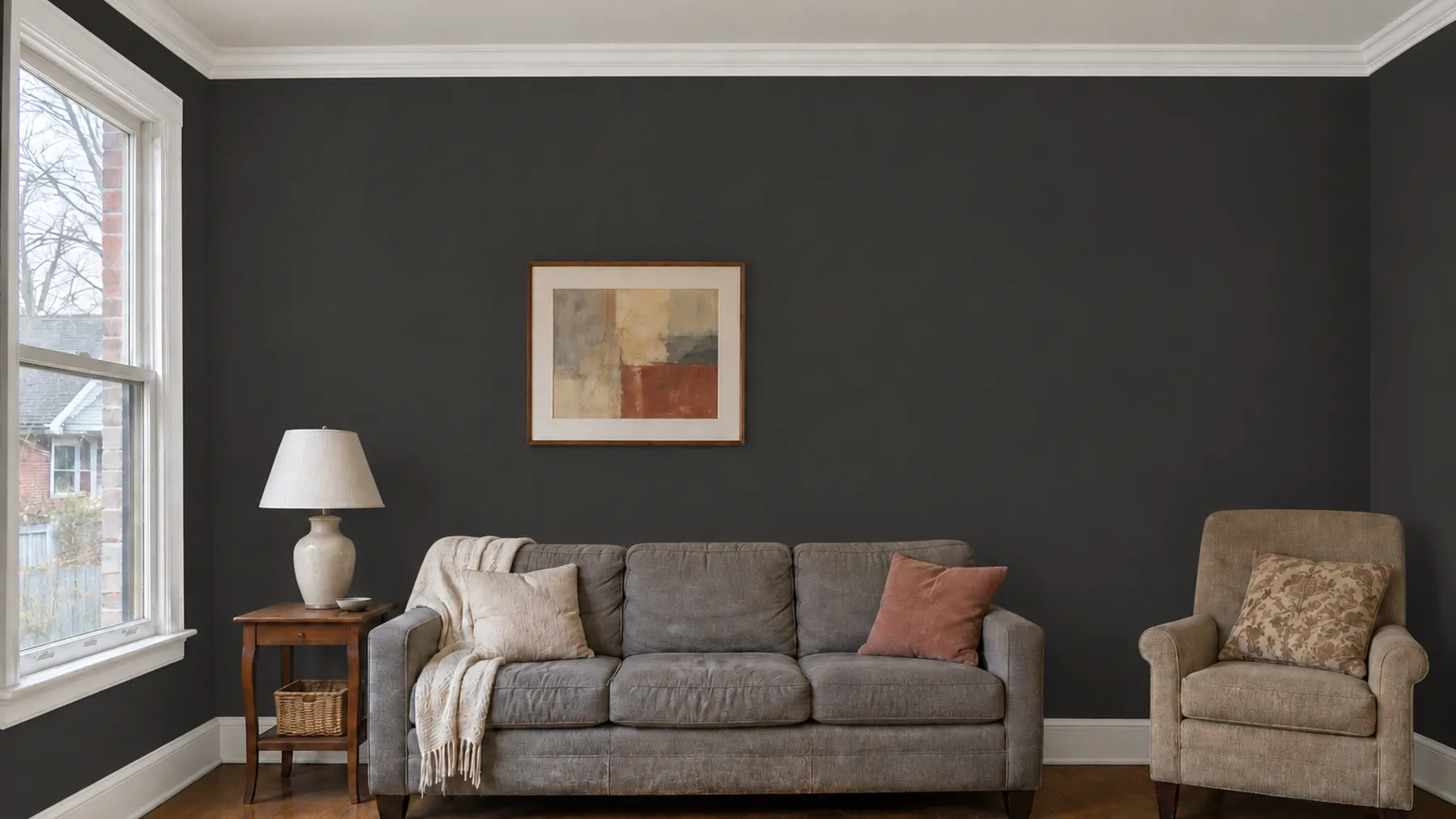
Same room · four colours
Pick your colour.
Colour 01 of 05
The room as it is
Yellowed walls, scuffs at sofa height, a patch that flashes in the light and trim that has taken a few knocks. Most repaints start here.
- First job
- Fill, sand and spot-prime before any colour
- Worth knowing
- Old patches show through new paint unless they are primed
Colour 02 of 05
Deep canal blue
A deep colour makes white trim look sharper and the room feel finished. It also shows every flaw in the wall, so the prep has to be right.
- Best in
- Rooms with good daylight and white trim
Colour 03 of 05
Soft sage
A grey-green that sits quietly behind wood floors and warm fabrics. Forgiving in north light, where cooler colours can turn flat.
- Best in
- Family rooms and bedrooms
Colour 04 of 05
Warm white
Bright and calm. The trick is the sheen: walls in a washable matte and trim in a satin, so the two whites read as different surfaces.
- Best in
- Small rooms and open plans
Colour 05 of 05
Dark charcoal
The boldest of the four. Dark walls need a level surface and two full, even coats, or lap marks show at every angle.
- Best in
- Dens, media rooms and feature walls
One living room, four finishes. Photo-realistic renders for comparison, not finished customer projects. Ratings compare the four colours with each other; your light and your walls decide the right one.
Every surface in the room
Walls are only part of it. Each surface in a house has its own product and its own method.
Which room are you painting?
Every room asks something different of its paint. Pick one to see what we would plan for.
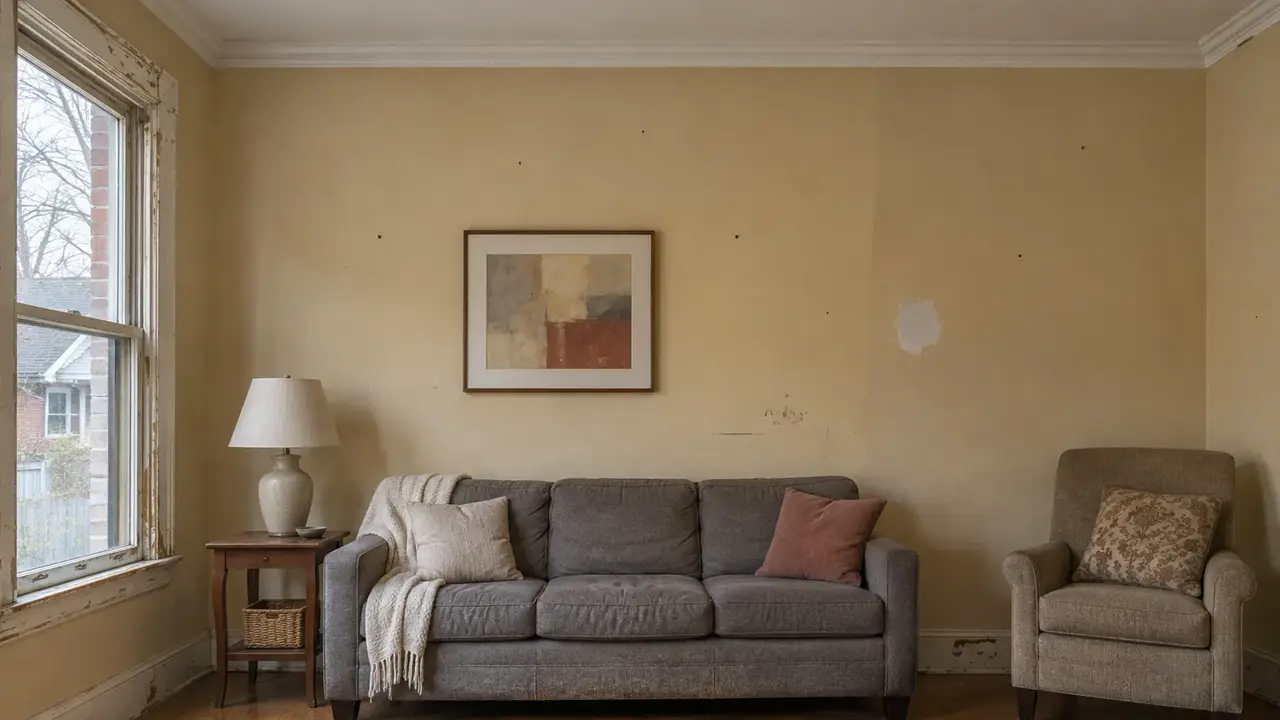
One room, start to finish
From tired to finished.
The room as it was
Yellowed walls, scuffs, nail holes and one old patch.
Colour moves across
After the holes are filled and the patch is primed, the first wall takes its colour.
Trim comes back
Chipped casing and baseboards turn a clean, bright white.
Finished
Same room, same furniture, same light. Only the paint changed.
Paint, sheen and the products that matter
Why the grade of paint matters
Two cans of white can look identical in the store and behave differently on the wall. Better paints carry more of the solids that form the film, and better binders. That gives coverage in fewer coats, resistance to scrubbing and a finish that touches up without leaving a mark. Cheap paint often costs more in the end, because it takes an extra coat and scuffs sooner.
The product line, colour code and sheen for every surface are written into your quote. That record is useful years later, when one wall needs a touch-up and you want the same paint.
Sheen, room by room
Flat and matte finishes hide surface flaws and suit ceilings and low-traffic rooms. Eggshell is the all-rounder for living areas and bedrooms. Satin and semi-gloss stand up to moisture and scrubbing, so they suit kitchens, bathrooms and trim. They also highlight every imperfection, so the prep under them needs more care. The sheen finder on our main page lets you compare them.
Primer is not optional where it is needed
Primer has specific jobs. A stain blocker seals water marks, smoke, marker and wood knots. A bonding primer grips glossy or oil-painted surfaces so that modern water-based paint can go over them. A drywall primer seals new board and fresh skim coats so the finish dries evenly. Using the right one in the right place is a large part of what separates a job that lasts from one that peels.
Low odour, low VOC
Canada limits the VOCs in house paint. Today's premium interior paints are low in odour and dry quickly. Most rooms can be used again the same evening. We still ventilate while working and tell you the cure time. Paint takes a few weeks to reach full hardness, even though it feels dry in hours.
How an interior job runs in your home
You should know what happens each day, who is in the house and what you need to do. It comes down to six stages.
Walk-through and written scope
We look at every room in daylight, note repairs, and agree on surfaces, colours, sheens and the number of coats. You get it in writing, room by room, so nothing is assumed.
You clear the small things
Pictures, lamps, ornaments, electronics and anything fragile come out of the rooms. Large furniture stays: we move it to the centre and cover it.
Protect and prep
Floors are covered, plates and vents come off, walls are washed where needed, then filled, sanded and spot-primed. This is often a full day on its own in a lived-in house.
Ceilings, then walls, then trim
Work runs top down so drips never land on finished surfaces. Where possible, we finish each room before starting the next, so the whole house is never upside down at once.
Daily tidy
At the end of each day we gather the tools, sweep the floors and leave a clear path through the house. We put finished rooms back together.
Final walk-through
You and the painter go through every room in good light. Anything that is not right is fixed, and labelled touch-up paint is left for each colour.
Inside the wall
Seven layers, and the two you see.
Scroll to pull the wall apart.
Second finish coat
The coat you see and wash. It evens the colour and the sheen, which is why one coat rarely looks finished.
First finish coat
It builds the colour and shows what the wall still needs. Any flaw it reveals gets fixed before the second coat.
Primer
Primer seals patches and stains and gives the finish something to grip. Bare filler without it flashes dull through the paint.
Filler and skim coat
Dents, nail pops and seams are filled and sanded flat. Paint follows the surface under it, so this layer decides how the wall looks.
Joint tape
Paper or mesh tape bridges every joint between sheets. When it lets go, you see a ridge or a crack in the paint.
Drywall
Gypsum board faced with paper. Torn paper has to be sealed before filling, or it bubbles under the new paint.
Framing
Wood studs move a little with the seasons. That movement is where nail pops and corner cracks come from.
Interior painting in Ottawa homes
The age of a house changes the job. Homes in the Glebe, Old Ottawa South or Sandy Hill often have plaster walls that crack along the same lines every winter. Many also have deep wood trim under many coats of old paint, and ceilings that are anything but flat. Those walls reward patience: flexible repairs, the right primer and a finish that is not too shiny.
A home built before 1960 probably has lead-based paint somewhere in its layers. That comes from Health Canada. Intact paint is normally left in place and painted over. Where old paint is peeling, or where trim needs heavy sanding, we test it first. If the test finds lead, the method changes so the dust stays contained.
Many houses from the 1960s to the 1980s have textured ceilings. You see them across Nepean, Gloucester and older parts of Kanata and Orleans. They can be painted, but nobody should scrape or sand them before a lab test. Ceiling texture from before 1990 can contain asbestos. For smooth ceilings, see popcorn ceiling removal in Ottawa.
Newer homes in Barrhaven, Riverside South, Stittsville and Findlay Creek have a different issue. The builder leaves a thin coat of flat paint that marks when you look at it. Nail pops and corner cracks follow as the frame dries and settles in its first few winters. We fix those properly under drywall repair in Ottawa before the house gets its first real two-coat finish.
Getting the colour right
Choosing colour is the part people enjoy and the part they worry about. A few habits take most of the risk out of it.
Test large, test on the wall
A paint chip is a few square centimetres printed in ink. Your wall is square metres of real paint under your own light. Paint a sample at least two feet square on two different walls, one near the window and one away from it. Live with it for a couple of days. Look at it in the morning, at midday and under lamps at night.
Light changes everything
North-facing rooms get cool, even light that makes colours look greyer and darker. South-facing rooms get warm light that brightens and yellows them. The same paint can look like two different colours in two rooms of one house. The colour in your light tool on the main page shows the effect.
Plan the house, not only the room
In open-plan homes, where the kitchen, dining and living areas share walls and sightlines, colours need to relate. One main colour through the connected spaces usually looks more considered than a different colour everywhere. A deeper or lighter relative can then sit on a feature wall or in an adjoining room. White trim and ceilings throughout tie it together.
Questions people ask
Good to know first.
How long does interior painting take?
One average room with light repairs is usually a day, including two coats. A whole floor is typically several days, and a full house longer, depending on repairs, ceiling heights and whether trim and doors are included. Your written scope gives the plan day by day.
Do I need to leave the house while you paint?
No, you can stay. We sequence the work so you always have a kitchen, a bathroom and somewhere to sleep. With low-odour paint, most rooms are usable the same evening. If someone in the home is sensitive to smells, tell us and we plan the order and the airing time around them.
Do you paint ceilings and trim as well as walls?
Yes, and it is usually worth doing them together. Fresh walls next to yellowed trim or a grey ceiling make the old surfaces look worse than before. Each is listed separately in the scope so you can choose.
Can you paint over wallpaper?
Painting over paper can work when the paper is sound, flat and well stuck, using an oil-based or shellac primer to seal it first. Usually the better answer is to remove it and repair the wall. For removal and new paper, see our page on wallpaper installation in Ottawa.
My trim was painted with oil paint. Can you use water-based paint on it?
Yes, with the right preparation. We clean the old enamel, sand it dull and coat it with a bonding primer, then finish with a modern water-based enamel. Without that primer, new paint can scratch off with a fingernail.
How many coats will my walls need?
Most walls need two coats. One coat may be enough for a same-colour refresh on sound walls. Strong colour changes, new repairs and deep colours need primer plus two coats, and occasionally a third.
What should I do before the painters arrive?
Take down pictures and curtains, and clear shelves and surfaces. Move small furniture out of the room if you can, and decide where pets will be. Leave the large pieces to us.
How soon can I wash the walls or hang pictures?
Pictures can usually go back after a day or two. Hold off on washing or scrubbing for about three to four weeks, the time most water-based paints take to cure fully. The paint label gives the exact figure.
More from The Ottawa Painter
See a room get prepped and painted step by step, and try the colour tools, on the main page for painters in Ottawa. Or go straight to another service or area.
Start with a conversation
Tell us about the job
613-851-7831The estimate is free. Call for the quickest answer, or send the form and you will get a call back to talk through the rooms, the surfaces and the timing.