Siding · Brick · Doors · Decks · Fences
Exterior painting in Ottawa, built to take the winter.
Outside paint has one job that indoor paint never faces: surviving a freeze, a thaw and a summer of sun, year after year. Washing, scraping, priming and timing decide that, long before we open the colour. Our exterior painters in Ottawa plan every job around those four things.
12 years of experience. Free estimate on every job. One crew for the repairs and the paint.
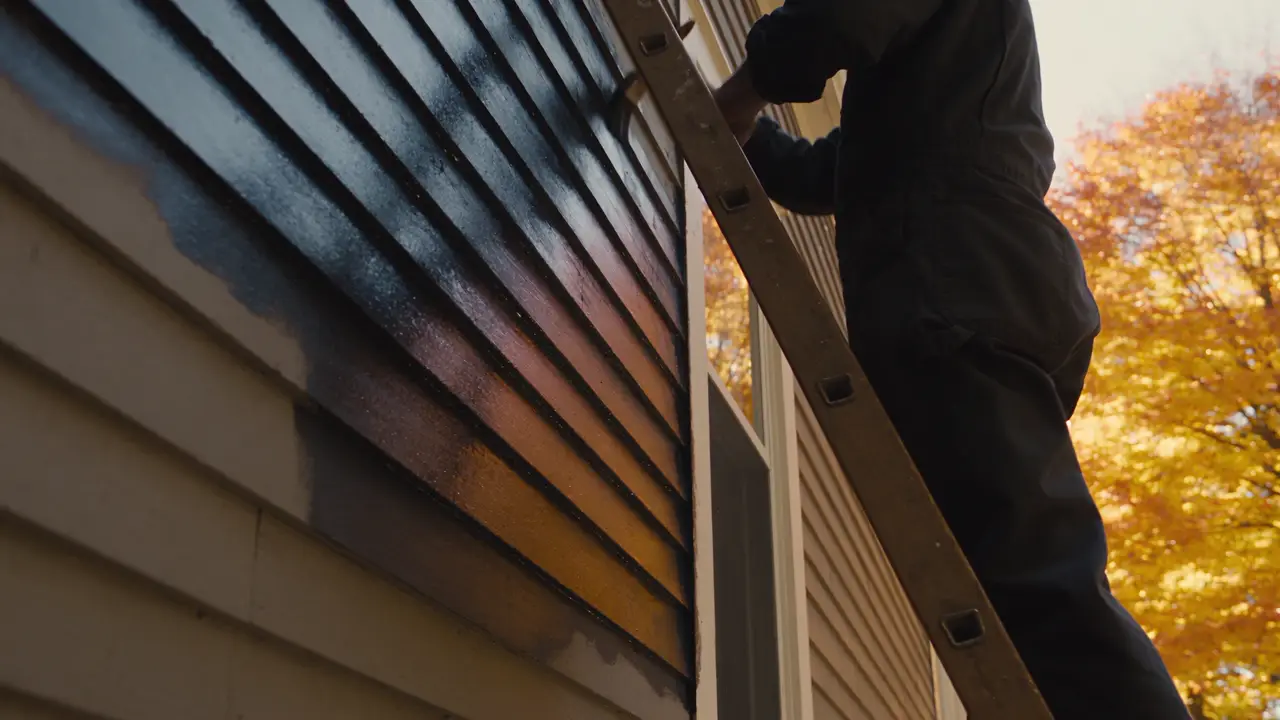
- What we coat
- Siding, trim, brick, doors, garage doors, decks, fences
- Working season
- Late spring to early fall, weather allowing
- Older homes
- Peeling paint from before 1990 is tested for lead
- Next step
- A walk around the house and a written scope
Why exterior paint fails early
Good exterior paint, applied well, should last many years. When a paint job peels in two or three, one of four causes is nearly always behind it. None of them is the brand of paint.
Paint over dirt, chalk or mildew
Siding collects road dust, pollen and a fine film from the air. Old paint also breaks down into a powder, called chalking, that you can wipe off with a finger. New paint laid over either one sticks to the dirt, not to the house. We start every house painting job with a wash. We scrub chalky surfaces or prime them with a product made to lock the chalk down.
Green or black patches on the shaded side of a house are usually mildew or algae. We kill them and rinse them off first. Painted over, they keep growing and push through the new coat within a season.
Paint over loose paint
New paint is only as well attached as the layer under it. We scrape back every flake that is ready to lift until the edge is firm. Then we sand the edge so it does not print through as a ridge. On old wood siding this is the slowest part of the job, and the part that decides how long the result lasts.
Bare wood left unprimed
Scraping exposes raw wood. Raw wood drinks the binder out of finish paint and leaves a weak, dull patch that fails first. We spot-prime each bare area with an exterior primer before any top coat. Knots and cedar or redwood, which bleed brown tannins, get a stain-blocking primer.
Water getting in behind
Most peeling on wood starts from moisture behind the paint, not from weather hitting the front. Open joints at window trim, split end grain and missing caulk all let water into the wood. So does soil or mulch piled against the bottom board. As the sun warms the wall, that water pushes outward and lifts the film. Sealing those entry points is part of prep. Sometimes the moisture comes from inside the house, from a bathroom or kitchen with no vent. Paint alone will not hold there, and we will tell you so.
Before and after
From peeling to protected.
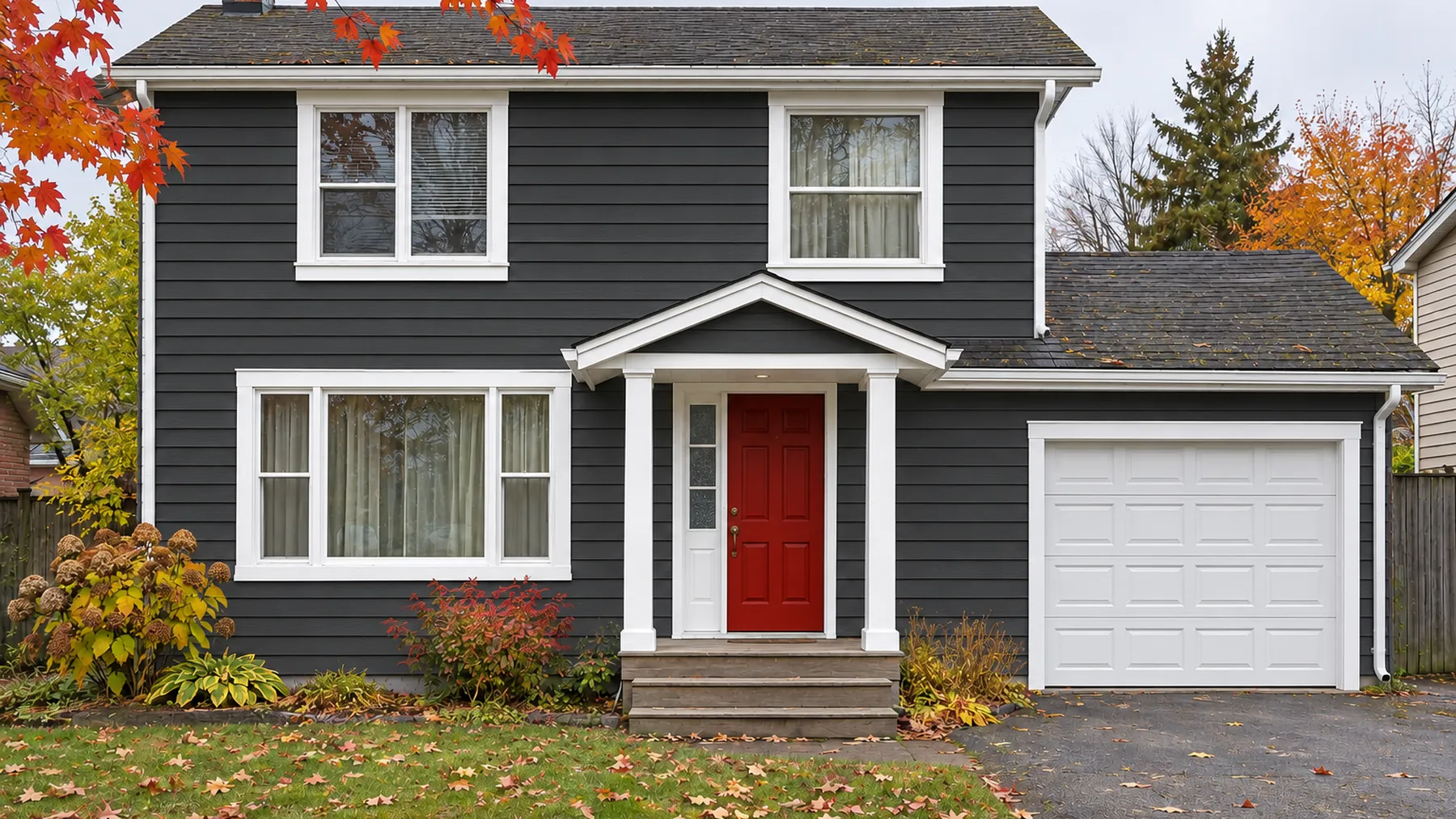
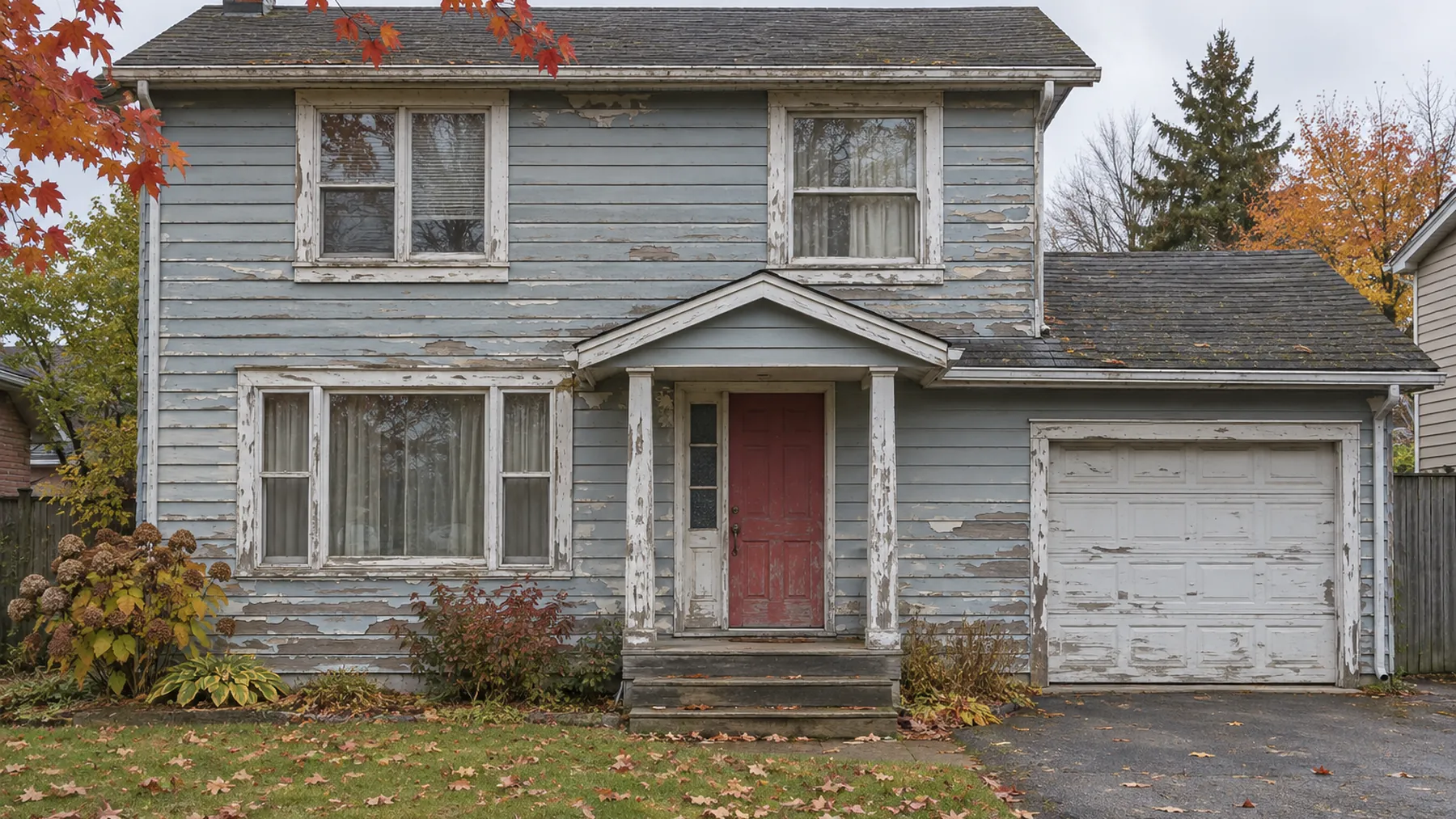
Peeling paint is scraped back to a sound edge, bare wood is primed and the joints are caulked before any colour goes near the wall.
A photo-realistic render of a typical space, not a finished customer project.
What is your house clad in?
Each material needs a different primer and a different approach. Choose yours.
How an exterior job is carried out
The order matters more outdoors than in, because each stage depends on the weather that follows it.
Walk-around and scope
We look at every elevation, note rot, peeling, failed caulk and moisture sources, and agree on what is painted and in what colours. We identify rotten boards before the job starts, not halfway through.
Protect the surroundings
We cover or tie back plants and mask walkways, decks, light fixtures and windows. Vehicles move well away from the work before we start.
Wash
We wash the house to remove dirt, chalk and mildew, then leave it to dry properly. Painting damp wood traps water under the film, so we build in a day or two of drying time.
Scrape and sand
We remove loose paint to a sound edge and feather it. On pre-1990 homes we use methods that keep paint chips and dust contained and collected.
Repair
We replace split or rotten wood or rebuild it with exterior filler. We also reset nails and refasten loose trim.
Prime and caulk
We prime bare wood and repairs. Once the primer is on, we seal the joints around windows, doors and trim with a flexible exterior caulk, so the caulk grips.
Two finish coats
We apply each coat of paint by brush, roller or sprayer, depending on the surface. On rough wood we back-brush so the paint works into the grain. We lay each coat when the wall, and not only the air, is within the temperature range on the label.
Clean-up and walk-around
We take the masking off, collect chips from beds and lawns, and walk the house with you from every side.
Decks and fences: stain, not paint
Horizontal wood lives a harder life than a wall. It holds snow and standing water, takes foot traffic and bakes in the sun. That changes the product and the expectations.
Choosing a deck finish
Stains soak into the wood where paint sits on top. A transparent or semi-transparent stain shows the grain, wears away gradually and is easy to refresh with a clean and a recoat. A solid stain hides the grain and gives more colour and more protection from the sun. The trade-off is that it eventually peels where water gets underneath. Paint on a deck floor almost always peels, which is why we steer people toward stain for anything you walk on.
Preparation is most of it
An old finish that is flaking has to come off, by stripping, sanding or both, or the new coat will fail with it. We clean and brighten grey, weathered wood so the stain can penetrate. New pressure-treated lumber is usually too wet to take stain when it is installed and needs time to dry out first. A simple test is to sprinkle water on a board: if it beads, wait; if it soaks in, the wood is ready.
Fences
Fences are vertical, so finishes last longer on them than on a deck. Spraying and back-brushing gets stain into rough-sawn boards and between pickets quickly and evenly. Deck staining and fence staining are natural additions to a house repaint, since the equipment and the weather window are the same.
What happens without prep
Painting day to seven winters.
Drag through time on a wall that was painted without scraping, priming or caulking.
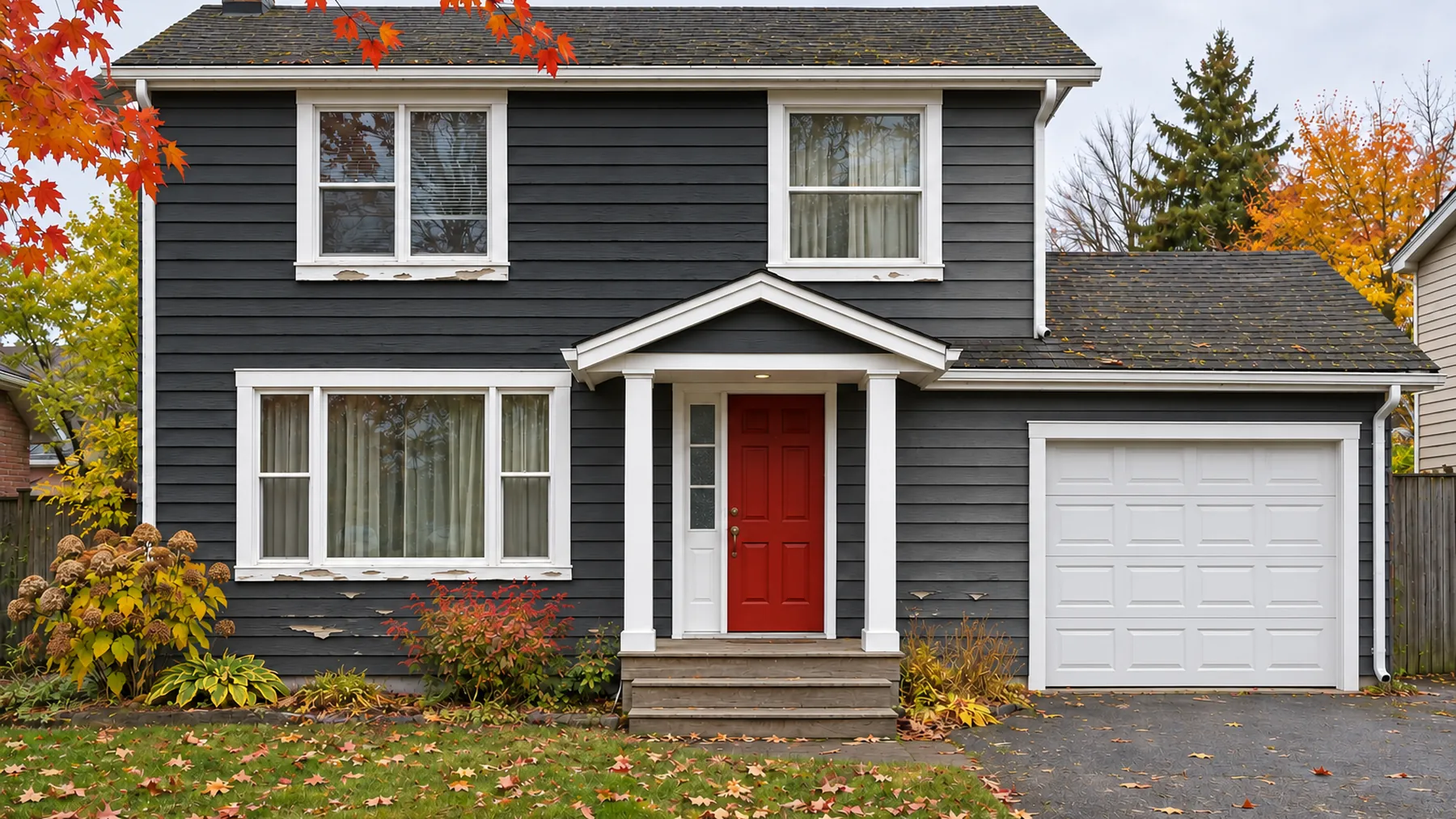
It all looks the same on day one
A coat rolled over loose paint and bare wood looks as good as a proper job the day the ladders leave. The difference is underneath.
The shortcuts start to show
Water gets behind the film where old paint was never scraped back. Blisters open on the lower boards and under the sills, where snow and rain sit longest.
Now it all has to come off
Sheets of paint let go and bare wood greys in the sun. Putting it right now means scraping the whole wall, priming the wood and starting again.
Photo-realistic renders for comparison, not finished customer projects. How fast paint fails depends on the wall, the sun it gets and the prep under it.
The details people notice first
Small surfaces carry much of the look of a house. We quote each as its own line, so your painting project can be as large or as small as you choose.
Timing an exterior job in Ottawa
Exterior paint needs the right temperature to cure well. The limit that matters is the temperature of the surface, through the night as well as the day. Each product prints its minimum on the label. In Ottawa that makes late spring to early fall the dependable season, with the shoulder weeks judged day by day.
Morning dew and evening damp shorten the working day at both ends of the season. Paint needs to be dry to the touch before dew settles on it, so on cool days work stops in mid-afternoon. In high summer the problem reverses, because a wall in full sun can be too hot. Paint that dries too fast blisters or shows lap marks. Good crews follow the shade around the house.
We plan around rain and do not gamble on it. A wall needs to be dry before we paint it and to stay dry while the coat sets. That is why an exterior quote gives a window of dates, not a fixed day.
Which side of the house fails first is predictable. South and west walls take the most sun and the widest temperature swings, so their paint ages fastest. North walls stay damp and grow mildew. Walls beside a driveway or the street catch winter road salt. A good scope treats each side for what it faces.
Homes built before 1960 probably have lead-based paint on them. The exteriors of homes built between 1960 and 1990 may have it too. That comes from Health Canada. On a house of that age, we test peeling exterior paint before we scrape it. If lead is present, we set up the work so chips and dust are contained and collected. We never dry-sand old paint into the garden.
Colour on a house exterior
Start with what will not change
The roof, the brick, the stone and the windows are fixed colours. A scheme works when the siding and trim relate to those. We begin by reading the undertones of the roof and masonry. Then we choose a body colour that sits comfortably beside them.
Body, trim, accent
Most houses look best with three colours. Use one for the body, one for trim, and one accent for the front door and perhaps the shutters. Trim that is a little lighter or darker than the body outlines the architecture. The accent is where personality goes.
Test outside, at full size
Colours read lighter and cooler in daylight than they do on a chip indoors. Paint a large sample on the sunny side and the shaded side and look at it morning and evening before deciding. If the inside of the house is next, the same care applies to interior painting in Ottawa.
Questions people ask
Good to know first.
When can you paint a house exterior in Ottawa?
The reliable season runs from about late May to early October. Outside those weeks it depends on overnight lows. The surface must stay above the minimum temperature on the paint label while the coat cures.
How long does exterior paint last?
That depends on the surface, the sun it gets and, most of all, the prep. A good paint job on well-prepared siding lasts many years; sun-beaten south walls and horizontal surfaces such as sills and decks need attention sooner. We will tell you which parts of your house to expect to touch up first.
Can you paint aluminum or vinyl siding?
Yes, we paint both. Aluminum must be washed free of chalk and primed where bare. Vinyl needs an acrylic made for it and a colour no darker than the original. The exception is a vinyl-safe formula, because ordinary dark colours can overheat and warp the panels.
Should I paint my brick?
Think carefully first. Paint on brick is close to permanent and the wrong coating can trap moisture and damage the brick through freeze and thaw. Already-painted brick can be recoated with a breathable masonry paint. For bare brick we usually suggest a mineral stain or limewash, or leaving it natural.
Do you pressure wash before painting?
We always wash the house. We keep the pressure low on wood and old mortar, where a strong jet drives water into the wall and tears up the surface. Then we leave everything to dry before applying any primer.
What do you do about rotten wood?
We cut out small areas, rebuild them with exterior filler or new wood and prime them on all sides. Larger rot, such as a whole sill or run of fascia, is carpentry that should come before painting. We flag it at the quote so you know before we start.
Is there lead in my exterior paint?
According to Health Canada, your paint may contain lead if the house was built before 1990. It probably does if the house was built before 1960. We test peeling paint on a house of that age first and scrape it with containment if lead is found.
Do you stain decks and fences too?
Yes, we stain both. We often do them together with the house. Decks get a penetrating stain, not paint, because paint on a walking surface peels.
More from The Ottawa Painter
See a room get prepped and painted step by step, and try the colour tools, on the main page for painters in Ottawa. Or go straight to another service or area.
Start with a conversation
Tell us about the job
613-851-7831The estimate is free. Call for the quickest answer, or send the form and you will get a call back to talk through the rooms, the surfaces and the timing.